
Advocacy, Artificial Intelligence, FERA Speaks, News
FERA public affairs officer Contributes to European Parliament Report on the cultural sectors in the age of AI
2 September 2026
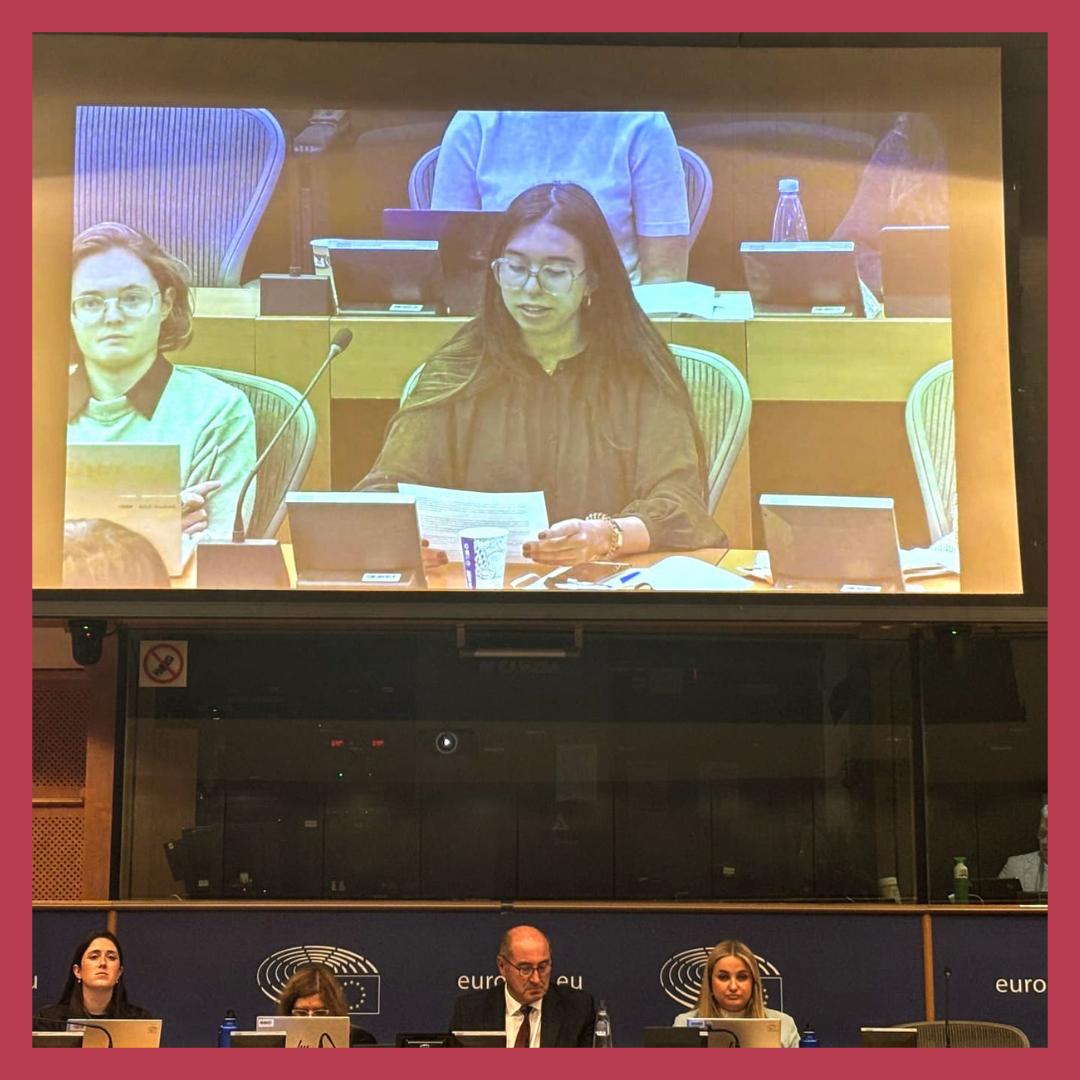
Innovation cannot come at the expense of creators. That was the message at the heart of FERA contribution to the European Parliament’s debate on the CULT Committee’s upcoming own-initiative report on “Cultural and Creative Sectors in the age of AI.” FERA public affairs officer Aline Bacqué provided input at the European Parliament on 2 September 2026, as part of the preparation of the report. The intervention focused on how Europe should approach artificial intelligence in the cultural and creative sectors, with FERA calling for a strategy that places human creativity, cultural diversity and social fairness at the centre of Europe’s approach to AI.
There can be no credible AI strategy without guaranteeing effective protection for creators. Existing European safeguards must be properly implemented and enforced, ensuring creators retain rights over their works and receive fair remuneration when these are used by AI systems.Transparency must also be prioritised, particularly through the application of the AI Act, alongside the promotion of responsible practices across the sector.
The use of AI in the creation or development of a work should be clearly indicated, with appropriate labelling enabling audiences to distinguish between human-created works, works produced with AI assistance, and those generated entirely by automated systems.
Public funding should set clear standards for the responsible integration of AI into the cultural sector. Fully AI-generated works should not qualify for public support, while projects incorporating these technologies should demonstrate that their impact on creators has been properly assessed and addressed. Funding criteria should also include transparency requirements to protect authorship, artistic integrity and Europe’s cultural diversity.
At the same time, Europe must also address the risk of algorithmic uniformity, as AI systems may reinforce dominant cultural patterns and thereby limit diversity, pluralism and audience choice. Ensuring that diverse European works remain prominent and discoverable will therefore be essential to maintaining a rich and varied cultural landscape.
The transition to AI must also safeguard the conditions that enable creative careers to develop and thrive. A greater reliance on AI in the creative learning process could hinder emerging talent from gaining valuable experience, thereby reducing diversity and making the profession accessible to only a few. At the same time, rising production pressures and automation may put jobs and incomes at risk, making sector-specific reskilling and upskilling essential. In light of these considerations, a human-centred approach is required to ensure that technology complements rather than replaces creative professionals.
Finally, sustainability cannot be overlooked. Whilst the audiovisual sector has adopted measures to reduce its environmental impact, the growing use of large-scale AI brings additional challenges due to its considerable energy consumption. It is therefore essential that the regulatory framework take into account the environmental impact of AI and that major technology companies be held responsible for the environmental consequences of their activities.
The choices Europe makes today will determine whether technological progress can go hand in hand with the creativity, diversity and fairness that shape our cultural identity.
To go further:
FERA CEO at European Parliament to provide input on upcoming “Cultural and Creative Sectors in the age of AI” report: https://screendirectors.eu/fera-ceo-at-european-parliament-to-provide-input-on-on-upcoming-cultural-and-creative-sectors-in-the-age-of-ai-report/
FERA joins European authors and performers to call for an ambitious report to safeguard the creative community in the age of AI: https://screendirectors.eu/fera-joins-european-authors-and-performers-to-call-for-an-ambitious-report-to-safeguard-the-creative-community-in-the-age-of-ai/