23 November 2026
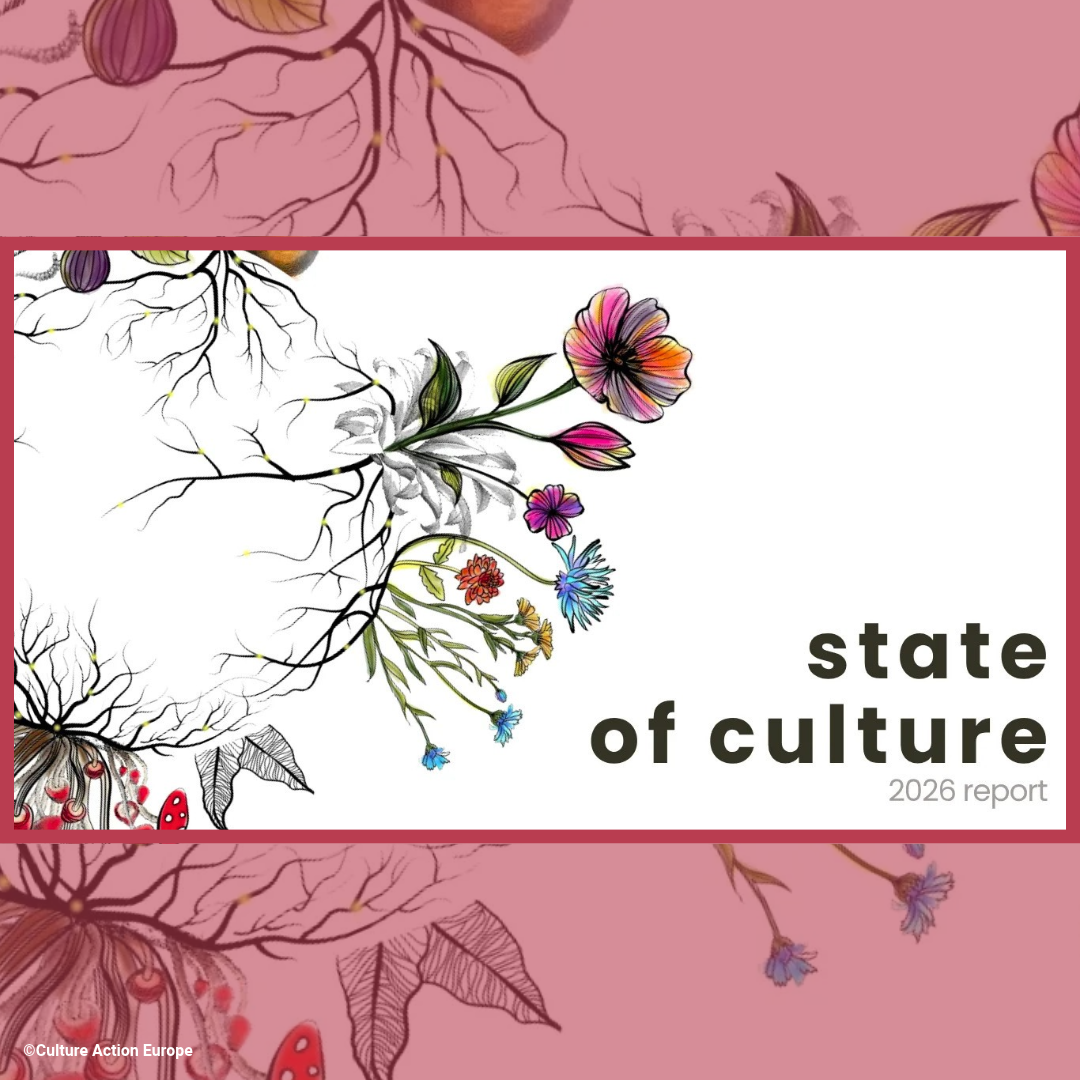
On 21 October 2026, Culture Action Europe published the second edition of its State of Culture Report, a biennial research initiative examining how culture is valued and addressed in national and European cultural policies. FERA CEO Julie Belgrado was among the 27 representatives of European and international cultural networks and associations interviewed for the report, contributing the perspective of European screen directors.
Written by researcher, consultant and cultural advocate Elena Polivtseva, the report examines developments across Europe’s cultural sectors and considers how effectively cultural policies respond to the needs and working realities of cultural professionals. Its research is based on interviews with 27 representatives of 19 European and international sector networks and associations, a review of cultural policy documents from 14 EU Member States and EU institutions, and a survey by 483 respondents.
The report identifies a persistent gap between the recognition of culture’s importance and the support it receives in practice. Although European institutions increasingly acknowledge culture’s contribution to democracy, social cohesion and collective life, funding and evaluation frameworks continue to favour short-term projects, predetermined objectives and measurable results. It therefore calls for a more structural approach, giving cultural professionals the resources, protection and freedom to play an active role in shaping Europe’s future. Moving beyond recognition towards greater agency is one of the report’s central messages.
Four key areas shaping Europe’s cultural landscape
The report explores four major areas of concern for Europe’s cultural ecosystem:
1- The Value of Culture: From Narrative Exhaustion to Policy Change. The growing recognition of culture as a public good needs to translate into more sustainable funding and support, moving beyond short-term projects and measurable outcomes.
2- Culture and AI: Human Agency on a Tightrope. The expansion of AI raises questions about authorship, creative livelihoods and who controls technological development, highlighting the need to protect human creativity and agency.
3- Artistic Freedom: From Legal Principle to Lived Capacity. Beyond censorship, financial insecurity, ownership concentration and platform power can undermine artistic independence, making stronger protection and sustainable working conditions essential.
4-Europe: A Continent of Culture? As geopolitical tensions challenge international cultural cooperation, the report considers how Europe can preserve its cultural diversity while remaining open to international exchange and new perspectives.
Regarding the audiovisual sector, the report highlights a shift from direct grants towards fiscal instruments, particularly tax incentives, which in some countries now exceed core national cultural budgets. While these measures encourage private investment, their cultural impact is rarely assessed beyond economic indicators, raising questions about their contribution to cultural diversity and independent filmmaking.
Citing a CISAC study, the report warns that generative AI could put 21% of audiovisual creators’ revenues at risk by 2028, potentially amounting to annual losses of up to €4.5 billion. It also highlights the risk to junior production roles, with consequences for entry-level opportunities, apprenticeships and the next generation of filmmakers.
To go further